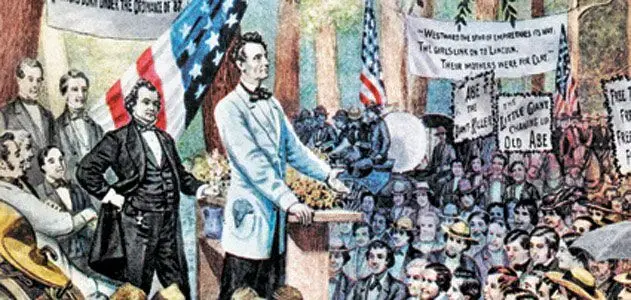
Leaders in Crisis: Lincoln's Union vs. Churchill's Defiance
An in-depth analysis of two of modern history's greatest wartime leaders. We compare the pragmatic resolve of Abraham Lincoln during the American Civil War to the defiant spirit of Winston Churchill in World War II.
Certain leaders are forged in the crucible of crisis, their legacies forever bound to the existential threats their nations faced. Two such figures, though separated by an ocean and nearly a century, stand as paragons of democratic leadership in wartime: Abraham Lincoln, the 16th President of the United States, and Winston Churchill, Prime Minister of the United Kingdom.
Lincoln fought to preserve a nation torn apart by internal division; Churchill rallied a nation standing alone against totalitarian conquest. Both were masters of the English language, using their words as weapons to inspire hope and galvanize their people. Both wrestled with the immense moral and strategic complexities of leading a free people in a total war. This is an exploration of two titans who, through different methods, saved the very idea of their nations.
Abraham Lincoln: The Pragmatic Poet of Union
When Abraham Lincoln took office in 1861, the United States was not a nation but a “house divided.” He faced a challenge of heartbreaking proportions: a civil war that pitted brother against brother. His genius lay in his profound understanding of the war’s dual nature: it was a military conflict to be won and a moral argument to be settled.
The Evolution of a War Aim
Initially, Lincoln’s sole objective was the preservation of the Union. He was a pragmatist, willing to tolerate slavery where it existed if it meant keeping the country whole. However, as the war dragged on, his purpose deepened. He recognized that the Union could not be truly saved if the underlying disease of slavery was not eradicated. This culminated in the Emancipation Proclamation, a masterful political stroke that transformed the war into a crusade for human liberty. It was a risky, controversial move that alienated many, but Lincoln understood it was the only path to a lasting peace.
Rhetoric as a Tool for Healing
Lincoln’s speeches are among the most sacred texts of the American republic. He possessed an almost unparalleled ability to articulate the nation’s highest ideals amidst its darkest hour. The Gettysburg Address, in just 272 words, redefined the war as a struggle to ensure that “government of the people, by the people, for the people, shall not perish from the earth.” His Second Inaugural Address, delivered when victory was in sight, offered not triumph but a plea for reconciliation: “With malice toward none, with charity for all… let us strive on to finish the work we are in, to bind up the nation’s wounds.” He used language not just to lead, but to heal.
Winston Churchill: The Bulldog’s Roar of Defiance
In 1940, Winston Churchill became Prime Minister when Britain’s situation was dire. France was collapsing, and the British army was trapped at Dunkirk. The nation stood alone against the seemingly unstoppable Nazi war machine, with many in his own government advocating for a negotiated peace. Churchill’s task was not to heal a divided nation, but to instill an iron will to fight in a nation facing annihilation.
The Personification of Resolve
Churchill’s leadership was a performance of pure, indomitable will. He embodied the spirit of British defiance. Where others saw only the possibility of defeat, he saw “our finest hour.” He was a bulldog, a force of nature who, through his sheer energy and self-belief, made surrender unthinkable. He did not offer his people false hope or easy victory; instead, he offered them “blood, toil, tears, and sweat.” This brutal honesty, combined with his unwavering resolve, was precisely what the British people needed to endure the Blitz and the long, dark years of the war.
Speeches as a Call to Arms
Like Lincoln, Churchill was a master orator. But where Lincoln’s rhetoric was often poetic and philosophical, Churchill’s was thunderous and defiant—a roar of defiance against the dying of the light. His speeches, broadcast over the radio, were not just updates on the war; they were national events that steeled the country’s resolve. Phrases like “We shall fight on the beaches” and “Never in the field of human conflict was so much owed by so many to so few” have become immortal because they perfectly captured the spirit of a people who refused to be broken.
A Study in Contrasting Leadership
Both men saved their nations, but their circumstances and styles present a fascinating contrast in crisis management.
| Leadership Aspect | Abraham Lincoln | Winston Churchill |
|---|---|---|
| Primary Challenge | Internal division and civil war. | External threat and imminent invasion. |
| Leadership Style | Pragmatic, patient, and morally evolving. | Defiant, energetic, and uncompromising. |
| Use of Rhetoric | To heal, unify, and articulate a higher purpose. | To inspire, defy, and steel the national will. |
| Relationship with Cabinet | Masterfully managed a “team of rivals” with opposing views. | Dominated his war cabinet, often acting as his own minister of defense. |
| Vision of Peace | A compassionate and non-punitive reconciliation. | A clear-eyed recognition of a new “Iron Curtain” threat. |
Lincoln was a master of the slow, painful process of turning a divided people towards a more perfect union. Churchill was a master of the immediate, visceral need for survival against a monstrous evil.
Conclusion: The Enduring Power of a Moral Cause
The legacies of Lincoln and Churchill endure not just because they were victorious in war, but because they successfully tethered their national struggles to profound moral causes. Lincoln transformed a war for territory into a war for human freedom. Churchill framed a war for survival as a war for the future of Christian civilization against pagan tyranny.
They teach us that in the darkest of times, leadership is not just about strategy and tactics. It is about articulating a cause so just, so fundamental, that it becomes worth any sacrifice. They prove that a nation’s greatest weapon is not its armies, but its resolve, and that resolve is forged in the fire of great words and even greater courage.
Continue Reading
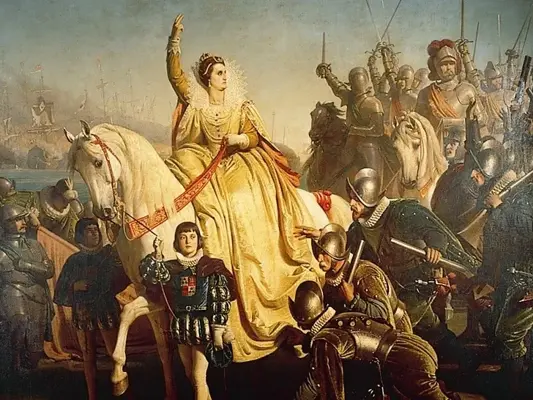
The Art of Power: A Deep Dive into History's Most Formidable Female Rulers
From Cleopatra's diplomacy to Elizabeth I's statecraft, explore the strategies, sacrifices, and legacies of the most powerful women in history. An expert analysis of female leadership through the ages.
Read More →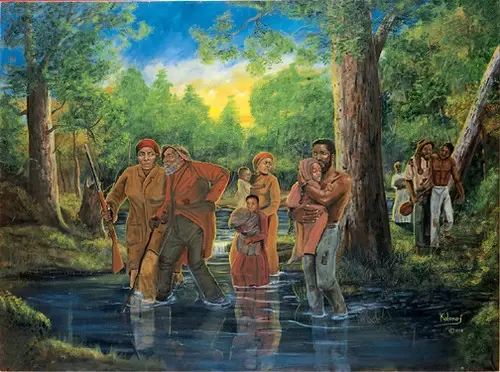
The Dual Fight for Freedom: Lincoln's Law vs. Tubman's Action
A comparison of two monumental American figures in the fight against slavery: Abraham Lincoln, who used the power of the Presidency, versus Harriet Tubman, who used direct, perilous action.
Read More →
Empires of Mind vs. Matter: Tesla vs. Caesar
A unique comparison between Nikola Tesla, the visionary inventor who electrified the world, and Julius Caesar, the conqueror who forged the Roman Empire. Who built a more enduring legacy?
Read More →