
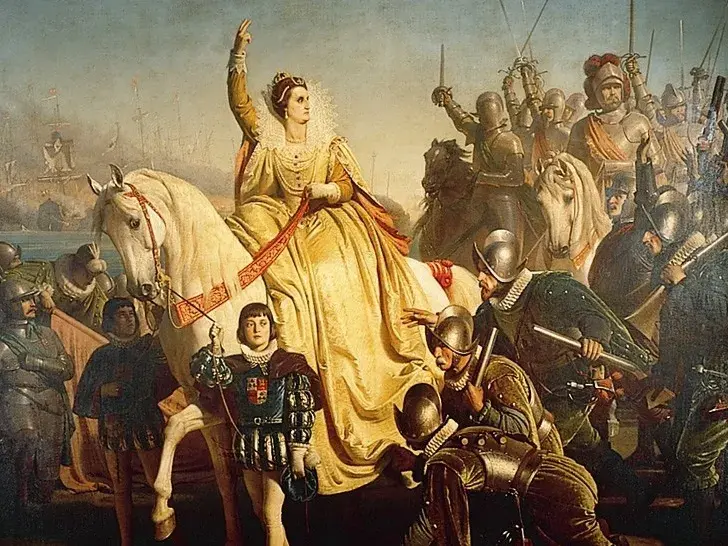
The Art of Power: A Deep Dive into History's Most Formidable Female Rulers
From Cleopatra's diplomacy to Elizabeth I's statecraft, explore the strategies, sacrifices, and legacies of the most powerful women in history. An expert analysis of female leadership through the ages.
History is often written as a chronicle of kings, emperors, and generals—a narrative dominated by men. Yet, woven into this epic tapestry are the stories of women who not only navigated but mastered the treacherous landscapes of power. They were not merely placeholders or consorts; they were architects of empires, shrewd diplomats, and symbols of national identity who wielded authority with a skill and tenacity that often surpassed their male contemporaries.
This deep dive explores the diverse strategies employed by four of history’s most formidable female rulers. From the gilded courts of Ancient Egypt to the misty shores of Roman Britain, we will analyze how Cleopatra VII, Queen Elizabeth I, Catherine the Great, and Boudica seized, maintained, and projected power in worlds designed to restrain them.
Cleopatra VII: Power Through Alliance and Intellect
The last queen of Egypt, Cleopatra VII, ascended to a throne on the brink of collapse. Her kingdom was a shadow of its former glory, caught in the inexorable pull of the expanding Roman Republic. In this precarious position, her sharp intellect became her greatest weapon.
Weaponizing Wit and Diplomacy
Cleopatra’s legendary relationships with two of Rome’s most powerful men, Julius Caesar and Mark Antony, were masterclasses in political strategy. These were not mere dalliances of the heart; they were calculated alliances designed to secure Egypt’s autonomy. By captivating Caesar, she ensured her crown and a powerful Roman ally. With Antony, she forged a formidable eastern power bloc to challenge their rivals in Rome. She understood that in an age of legions and brute force, the sharpest sword was a brilliant mind.
The Legacy of a Survivor
Ultimately, Cleopatra’s gamble failed, and her death marked the end of Egypt’s independence. Yet, her legacy is not one of failure, but of fierce, intelligent resistance. She has endured for millennia as a symbol of female power, strategic acumen, and unwavering determination to protect her people and her throne.
Elizabeth I: Forging a Nation Through Calculated Ambiguity
When Queen Elizabeth I inherited the throne of Tudor England, she was a young woman in a realm torn apart by religious strife and surrounded by hostile Catholic powers. Her 45-year reign would become a masterclass in statecraft, stability, and the art of the political long game.
The Cult of the Virgin Queen
Elizabeth’s most ingenious strategy was turning her unmarried status—a perceived vulnerability—into her greatest political asset. For decades, she dangled the prospect of a royal marriage to manipulate and neutralize her European rivals, playing Spanish, French, and Austrian suitors against each other without ever committing. By remaining the “Virgin Queen,” she ensured that England’s destiny remained solely in her hands, a powerful symbol of national sovereignty.
A Golden Age of Culture and Conquest
Her reign oversaw a flourishing of culture, epitomized by the genius of William Shakespeare and the glorious Renaissance Art of the era. But it was also an age of iron. Her leadership during the Spanish Armada crisis, where she delivered one of history’s most stirring speeches to her troops, galvanized the nation. This victory cemented England’s status as a dominant naval power and laid the foundations for the future British Empire.
Catherine the Great: Expanding an Empire with an Iron Fist and a Philosopher’s Mind
A German princess married into the Russian court, Sophia of Anhalt-Zerbst seemed an unlikely candidate to become one of history’s great empresses. Yet, through a bold coup d’état, she reinvented herself as Catherine the Great, a ruler who would drag the vast Russian Empire into the modern age.
The Enlightened Despot
Catherine was a fervent admirer of The Enlightenment, corresponding with philosophers like Voltaire and championing ideals of reason and progress. She modernized Russia’s laws, promoted education, and was a great patron of the arts. She embodied the ideal of the “enlightened despot”—a ruler who wielded absolute power, but for the betterment of her state.
Conquest and Contradiction
However, Catherine’s philosophical inclinations were backed by ruthless ambition. Her reign saw a massive expansion of Russian territory through military conquest and shrewd diplomacy, securing the Black Sea coast and partitioning Poland out of existence. This expansion, however, was built on the backs of Russia’s serfs, whose conditions often worsened under her rule—a stark contradiction to her enlightened ideals. Her legacy is one of duality: a champion of progress who was also an unapologetic imperialist.
Boudica: The Ferocious Spirit of Rebellion
Not all queens rule from gilded thrones. Some rule from the heart of a rebellion. Boudica, queen of the Celtic Iceni tribe in Britain, represents a different kind of power: the raw, untamable force of a people pushed to their limit.
A Queen Betrayed, A Rebellion Ignited
After the death of her husband, the Romans betrayed their treaty, flogged Boudica, and assaulted her daughters. This profound violation transformed a client queen into a fearsome warrior. Uniting several British tribes, she led a bloody uprising against the Roman occupiers, a campaign of pure vengeance that saw the complete destruction of several Roman cities, including Londinium (modern-day London). Though ultimately defeated by a professional Roman army, her rebellion shook the empire to its core.
A Legacy of Defiance
Boudica’s story is a powerful reminder that power can also be expressed through resistance. She has become an enduring British folk hero, a symbol of defiance in the face of an unstoppable force, and a testament to the idea that even in defeat, a legacy of courage can inspire for centuries.
The Diverse Strategies of Female Power
| Ruler | Path to Power | Primary Tool of Governance | Enduring Legacy |
|---|---|---|---|
| Cleopatra VII | Inheritance & Alliance | Diplomacy & Intellect | Symbol of strategic intelligence |
| Elizabeth I | Inheritance & Survival | Statecraft & Ambiguity | National stability & cultural flourishing |
| Catherine the Great | Coup d’État | Absolutism & Modernization | Imperial expansion & cultural patronage |
| Boudica | Betrayal & Rebellion | Military Uprising & Vengeance | Icon of resistance & national pride |
The reigns of these four women prove that power is not a monolith. It is fluid, adaptable, and expressed in a multitude of ways. From the quiet calculations of court politics to the thundering charge of a chariot army, they mastered the art of power in all its forms.
Discover more monumental figures in our Pantheon of Titans, or explore the foundational Concepts that have shaped political thought throughout history.
Continue Reading
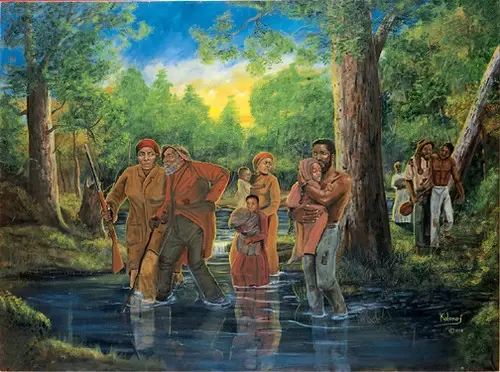
The Dual Fight for Freedom: Lincoln's Law vs. Tubman's Action
A comparison of two monumental American figures in the fight against slavery: Abraham Lincoln, who used the power of the Presidency, versus Harriet Tubman, who used direct, perilous action.
Read More →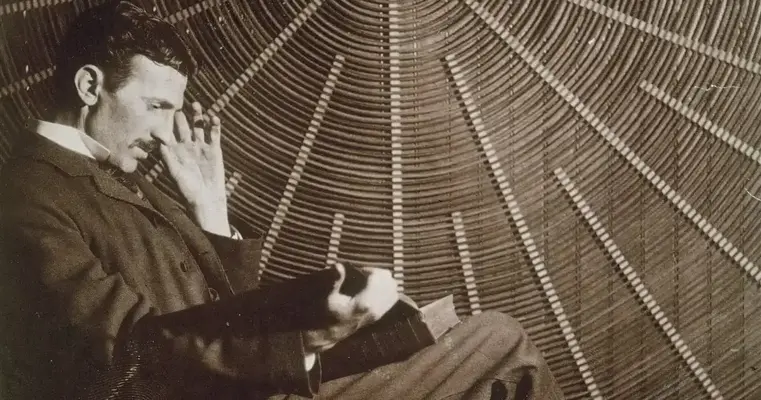
Empires of Mind vs. Matter: Tesla vs. Caesar
A unique comparison between Nikola Tesla, the visionary inventor who electrified the world, and Julius Caesar, the conqueror who forged the Roman Empire. Who built a more enduring legacy?
Read More →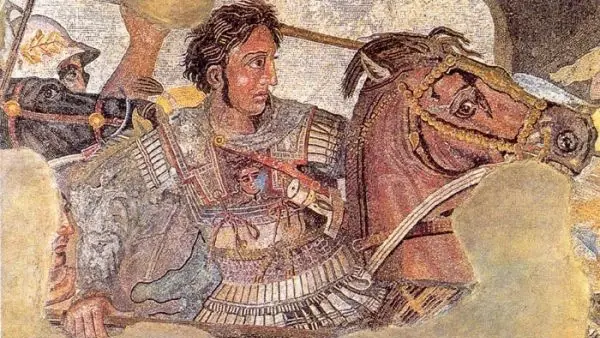
Conquest of Land vs. Conquest of the Future: Alexander the Great and Nikola Tesla
An epic comparison between Alexander the Great, who conquered the known world in a decade, and Nikola Tesla, who engineered the unseen empire of electricity that powers our modern age.
Read More →