
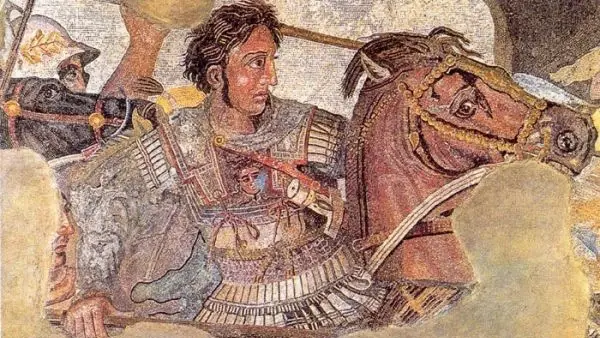
Conquest of Land vs. Conquest of the Future: Alexander the Great and Nikola Tesla
An epic comparison between Alexander the Great, who conquered the known world in a decade, and Nikola Tesla, who engineered the unseen empire of electricity that powers our modern age.
What is the measure of an empire? Is it the distance a soldier can march in a lifetime, or the speed at which an electric current can travel around the globe? History’s greatest figures have always sought to impose their will on the world, but their methods, and the durability of their dominion, vary wildly across the ages.
Two titans stand at the opposing poles of this ambition: Alexander the Great, the king who forged the largest contiguous empire of the ancient world through pure military genius; and Nikola Tesla, the visionary who created the invisible empire of energy that fuels our modernity. One conquered the world of matter; the other, the world of pure concept and force.
Alexander the Great: The Empire of Earth
By the age of thirty, the King of Macedon, Alexander, had carved out an empire stretching from Greece to northwestern India. His was an achievement of raw speed, ambition, and battlefield mastery, accomplished without the aid of modern logistics or communication.
Speed and Unstoppable Force
Alexander’s defining feature was his audacious speed and his perfection of the “combined arms” tactic, using his infantry phalanx to pin enemies while his elite Companion Cavalry delivered the decisive blow. He was “undefeated in battle” not merely by being clever, but by being relentless. His campaigns were a furious race against time, conquering territory faster than his presence could fade from memory.
The Legacy of Hellenization
Alexander’s empire was physical, vast, and mortal. It was held together by the loyalty of his troops and his personal cult of personality. Yet, his enduring legacy, Hellenization, was cultural—the deliberate spread of Greek language, philosophy, and urban life across a massive area. His ambition was to unite the world by blood and culture, an ideal he pursued with the fiery intensity of a man who believed, “There is nothing impossible to him who will try”. But his empire, dependent on his single will, crumbled immediately upon his death.
Nikola Tesla: The Empire of Energy
Two millennia later, Nikola Tesla, the Serbian-American inventor, faced a world already mapped and conquered. His battlefield was the laboratory, and his ambition was not to rule territory, but to harness the cosmic forces he believed governed it.
The Architect of Modern Power
Tesla’s greatest victory was in the “War of the Currents,” where his preferred system, Alternating Current (AC), ultimately prevailed over Thomas Edison’s Direct Current. AC’s ability to be efficiently transmitted over long distances created the modern power grid, an invisible, ubiquitous infrastructure that has brought light and machinery to every corner of the globe.
The Conquest of the Future
Tesla’s empire is not on any map, yet it is arguably more vast than Alexander’s. It is the power that hums in our walls, the principles of radio, and the conceptual foundation of robotics. His famous quote, “The present is theirs; the future, for which I have really worked, is mine”, perfectly encapsulates his vision: he sought to dominate the future not through control over land or people, but through control over the fundamental laws of nature. Like his contemporary Albert Einstein, his work fundamentally altered the reality we inhabit.
A Tale of the Tape: Land vs. Lightning
| Aspect | Alexander the Great | Nikola Tesla |
|---|---|---|
| Domain of Power | The known physical world (territory and armies). | The electromagnetic spectrum (energy and innovation). |
| Primary Weapon | The Macedonian Phalanx and Companion Cavalry. | The Alternating Current (AC) system. |
| Method of Rule | Military occupation and cultural imposition (Hellenization). | Scientific discovery and technological standards. |
| Enduring Legacy | A short-lived empire; long-term spread of Greek culture. | The electrical infrastructure of the entire modern world. |
Conclusion: The Final Triumph
The historical duel between Alexander the Great and Nikola Tesla highlights the shift in human ambition across the millennia. Alexander achieved what was once considered the ultimate conquest: to stand at the edge of the world with no more worlds to conquer. Yet, his physical empire faded almost instantly.
Tesla achieved a different kind of conquest: he built an empire of electricity and information that requires no army to maintain and no map to chart. It is an unseen dominion that grows stronger every day. In the end, Alexander proved that armies are limited by distance and time, while Tesla proved that true mastery comes from conquering the fundamental forces that shape reality itself.
Continue Reading
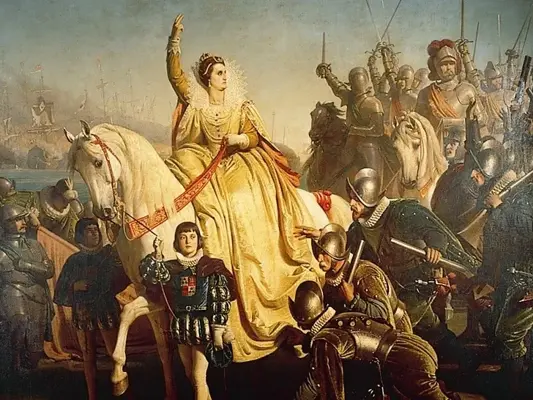
The Art of Power: A Deep Dive into History's Most Formidable Female Rulers
From Cleopatra's diplomacy to Elizabeth I's statecraft, explore the strategies, sacrifices, and legacies of the most powerful women in history. An expert analysis of female leadership through the ages.
Read More →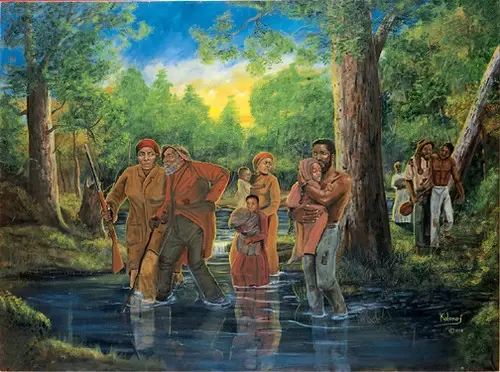
The Dual Fight for Freedom: Lincoln's Law vs. Tubman's Action
A comparison of two monumental American figures in the fight against slavery: Abraham Lincoln, who used the power of the Presidency, versus Harriet Tubman, who used direct, perilous action.
Read More →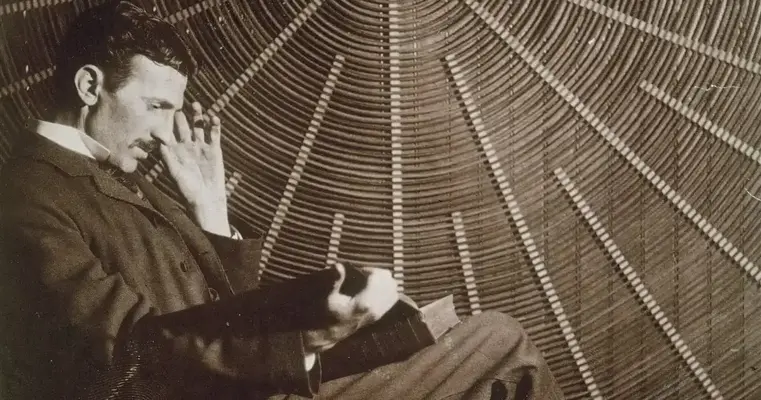
Empires of Mind vs. Matter: Tesla vs. Caesar
A unique comparison between Nikola Tesla, the visionary inventor who electrified the world, and Julius Caesar, the conqueror who forged the Roman Empire. Who built a more enduring legacy?
Read More →