
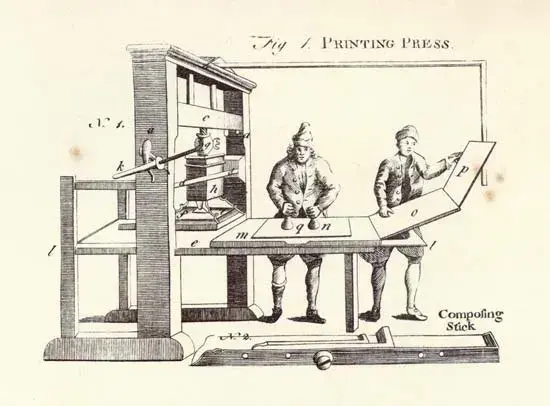
The Gutenberg Press vs. The Internet: An Unlikely Parallel
How did a 15th-century invention mirror the disruption of the digital age? An expert analysis of the Printing Press and the Internet, two technologies that democratized information and changed the world forever.
In the grand narrative of human progress, certain innovations act as pivotal moments, fundamentally altering the fabric of society. They are catalysts that accelerate history itself. Two such inventions, separated by over 500 years, stand as monuments to this transformative power: Johannes Gutenberg’s Printing Press and the modern Internet.
At first glance, the comparison seems absurd—a mechanical device of metal and ink versus a global network of instantaneous data. Yet, a deeper examination reveals an astonishing parallel. Both inventions triggered an information explosion, challenged established power structures, and ultimately democratized knowledge on a scale previously unimaginable.
The Printing Press: The First Information Revolution
Before the mid-15th century, knowledge was a scarce and precious commodity. Books were hand-copied by scribes, a laborious process that made them astronomically expensive and accessible only to the clergy and the ultra-elite. This centralized control of information was the bedrock of medieval society.
Gutenberg’s Disruption
Johannes Gutenberg’s invention of movable type changed everything. By allowing for the mass production of texts, the printing press crashed the cost of information. Ideas could now spread with unprecedented speed and reach. The Protestant Reformation, fueled by the mass distribution of Martin Luther’s theses, was one of its first and most dramatic consequences.
This newfound accessibility to knowledge was a key driver of the Renaissance. It allowed the principles of Renaissance Humanism to flourish beyond the confines of Italian city-states, empowering thinkers and artists like Leonardo da Vinci and fueling the curiosity that led to the Scientific Revolution. The press didn’t just print books; it printed a new world.
The Internet: The Second Information Revolution
For five centuries, the world built upon the foundation laid by Gutenberg. Then, in the late 20th century, another revolution began, this time with silicon and fiber optics. The Internet, born from military research, evolved into a global public network that dwarfed the impact of the printing press.
The Digital Explosion
If the printing press made information accessible, the Internet made it instantaneous and interactive. It removed the gatekeepers of publishing entirely. Any individual could now become a creator, a publisher, and a broadcaster, sharing their ideas with a global audience. This led to a Cambrian explosion of content and connectivity, reshaping every aspect of modern life.
The Internet has accelerated the pace of scientific discovery, connecting researchers worldwide in ways that figures like Albert Einstein could only have dreamed of. It has fueled political movements, from the Arab Spring to modern activism, echoing the way the press fueled the Reformation.
A Legacy of Disruption: Common Threads
| Impact Area | The Printing Press (c. 1440) | The Internet (c. 1990s) |
|---|---|---|
| Democratization | Made written knowledge accessible beyond the elite. | Made global publishing accessible to everyone. |
| Challenged Authority | Weakened the Catholic Church’s monopoly on scripture. | Disrupted traditional media, governments, and industries. |
| Enabled Revolutions | Fueled the Protestant Reformation and Scientific Revolution. | Enabled global social movements and political activism. |
| Created New Elites | Empowered a new class of literate merchants and thinkers. | Created new titans of tech and digital influencers. |
Both inventions faced skepticism and fear from established powers who recognized the threat they posed to the status quo. Both ultimately proved that once knowledge is democratized, it cannot be easily contained.
Conclusion: The Unstoppable Force of Connection
The story of the printing press and the Internet is the story of humanity’s innate desire to connect and share. They are not merely tools, but extensions of our collective consciousness. Gutenberg’s press allowed the ideas of one person to reach thousands; the Internet allows the ideas of millions to reach billions in the blink of an eye.
These revolutions teach us a vital lesson: the future is shaped not by those who hoard information, but by those who find new ways to set it free.
Explore the moments that defined our world on the Historic Milestones page, or dive deeper into the ideas that shaped civilization in our Library of Concepts.
Continue Reading
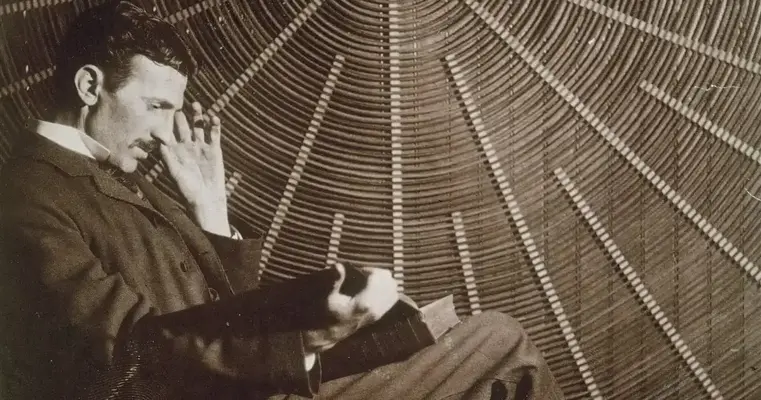
Empires of Mind vs. Matter: Tesla vs. Caesar
A unique comparison between Nikola Tesla, the visionary inventor who electrified the world, and Julius Caesar, the conqueror who forged the Roman Empire. Who built a more enduring legacy?
Read More →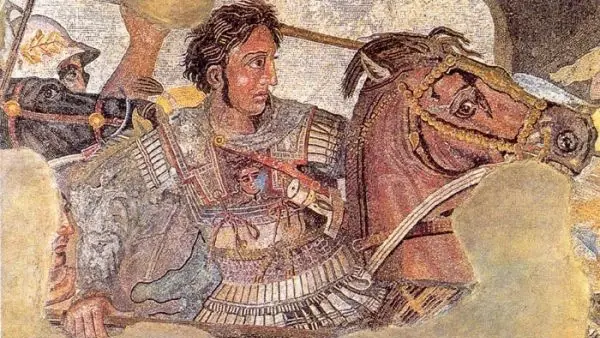
Conquest of Land vs. Conquest of the Future: Alexander the Great and Nikola Tesla
An epic comparison between Alexander the Great, who conquered the known world in a decade, and Nikola Tesla, who engineered the unseen empire of electricity that powers our modern age.
Read More →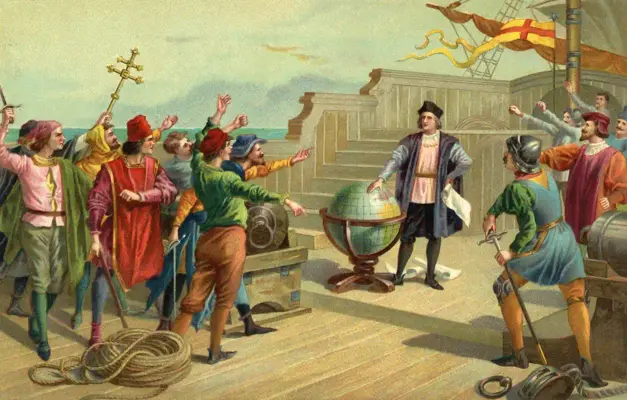
Clash of Frontiers: Suleiman's Law vs. Columbus's Horizon
A comparison of two contemporaries who ruled different spheres of the Renaissance world. Suleiman the Lawgiver dominated the East, while Columbus the Navigator expanded the West's very definition of the globe.
Read More →