
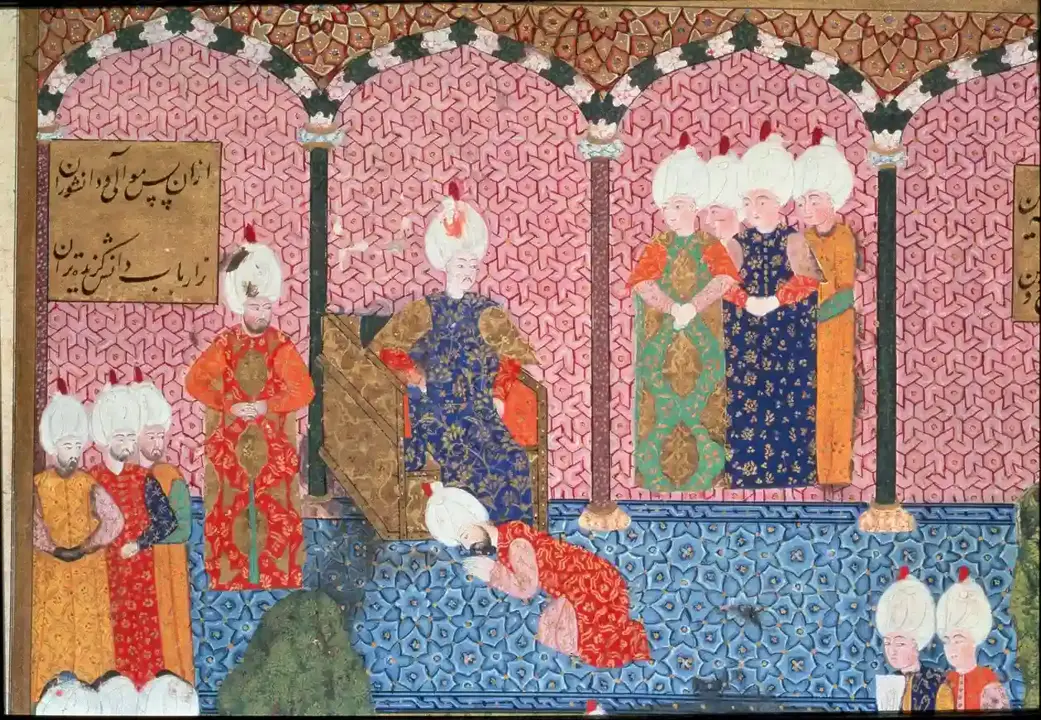
The Golden Throne: Mansa Musa vs. Suleiman the Magnificent
A profound analysis of two of history's most powerful rulers outside of Europe. We compare Mansa Musa's projection of power through legendary wealth and Suleiman's mastery of law and military conquest.
Power is expressed in many languages. For some, it is the disciplined thunder of a legion; for others, it is the dazzling spectacle of wealth. Two of the most formidable rulers of their time, straddling the transition from the Medieval to the Renaissance world, embodied these distinct forms of dominion: Mansa Musa, the King of the immensely wealthy Mali Empire, and Suleiman the Magnificent, the Sultan who brought the Ottoman Empire to its golden age of law and conquest.
While Musa projected power through soft diplomacy and economics, Suleiman wielded a formidable war machine and instituted a legal system that would govern his empire for centuries. This is a comparison of two titans who, through vastly different means, laid claim to the title of the world’s greatest ruler.
Mansa Musa: The King of Gold
Mansa Musa’s reign (c. 1280 - c. 1337) was a period of stability, cultural growth, and astonishing wealth for the Mali Empire. His dominion over the major gold and salt trading routes of West Africa gave him control over a resource that was the engine of global commerce.
The Pilgrimage as a Statement
Musa’s legendary hajj (pilgrimage) to Mecca in 1324 remains one of the greatest demonstrations of wealth in history. His caravan reportedly included tens of thousands of soldiers and servants, and hundreds of camels, each laden with massive amounts of gold. In Cairo, his lavish spending and donations were so great that the price of gold in the region was devalued for a decade. This was power projected not through conquest, but through sheer economic reality. The message was clear: the Mali Empire was the world’s financial center.
A Legacy of Learning
Beyond the gold, Musa dedicated his power to elevating his civilization. He famously transformed Timbuktu into a major center of Islamic scholarship and trade, funding the construction of mosques and libraries that attracted scholars from across the Muslim world. His slogan, “I will not be a ruler of a city of ruins,” reflects a commitment to building a lasting, intellectual legacy.
Suleiman the Magnificent: The Lawgiver
Two centuries later, Suleiman the Magnificent ascended the throne of the Ottoman Empire, a state already built on expansion and military might. Unlike Mansa Musa, Suleiman projected his power through decisive military action and, most enduringly, through a massive reform of the legal system.
Conquest and Golden Ages
Known in the West as “the Magnificent,” and in the East as Kanuni (“The Lawgiver”), Suleiman’s reign (1520 - 1566) was the zenith of Ottoman power. His armies conquered huge swaths of the Middle East and North Africa and challenged the powers of Europe, famously besieging Vienna. But military success was only half the story.
The Empire of Kanun
Suleiman understood that an empire spanning three continents and countless religions could not be ruled by military decree alone. He personally instituted major legislative changes, known collectively as the Kanun. These laws related to land tenure, taxation, and criminal justice, providing a stable, unified legal framework for all of his subjects. This emphasis on governance and justice is why his epithet, “The Lawgiver,” is his most important. Like Emperor Qin Shi Huang in ancient China, he sought to unify a diverse territory through standardization, but he did so with an emphasis on a legal and cultural flourishing that also made him a great patron of the arts and architecture.
A Clash of Two Golden Ages
The contrast between these two leaders highlights the different ways power can be established and maintained:
| Aspect | Mansa Musa (Mali Empire) | Suleiman (Ottoman Empire) |
|---|---|---|
| Primary Resource | Gold trade and economic power. | Military strength and territorial expansion. |
| Primary Goal | Cultural patronage and global recognition. | Legal reform and unified governance. |
| Method of Influence | Soft power, diplomacy, and lavish spectacle. | Hard power, military conquest, and a unified legal code. |
| Enduring Legacy | A legend of wealth and West African cultural zenith. | A stable legal and bureaucratic blueprint for a lasting empire. |
Conclusion: Wealth That Vanishes, Law That Endures
Mansa Musa’s influence was instantaneous and global, but ultimately finite—the gold he gave away eventually circulated, and his empire declined. His legacy remains a story of what African empires achieved, a powerful correction to Eurocentric history.
Suleiman’s impact was structural. His military power secured his borders, but his meticulous system of law and governance ensured that the Ottoman Empire endured as a cohesive, powerful entity for centuries after his death.
Musa proved that wealth can buy power and fame. Suleiman proved that only law and structure can sustain an empire through the ages. Both, however, left behind golden ages that define their respective civilizations.
Explore the lives of these and other monumental leaders in our Pantheon of Titans, or see how they clash in our Duels section.
Continue Reading
The Art of Power: A Deep Dive into History's Most Formidable Female Rulers
From Cleopatra's diplomacy to Elizabeth I's statecraft, explore the strategies, sacrifices, and legacies of the most powerful women in history. An expert analysis of female leadership through the ages.
Read More →
The Dual Fight for Freedom: Lincoln's Law vs. Tubman's Action
A comparison of two monumental American figures in the fight against slavery: Abraham Lincoln, who used the power of the Presidency, versus Harriet Tubman, who used direct, perilous action.
Read More →
Empires of Mind vs. Matter: Tesla vs. Caesar
A unique comparison between Nikola Tesla, the visionary inventor who electrified the world, and Julius Caesar, the conqueror who forged the Roman Empire. Who built a more enduring legacy?
Read More →