
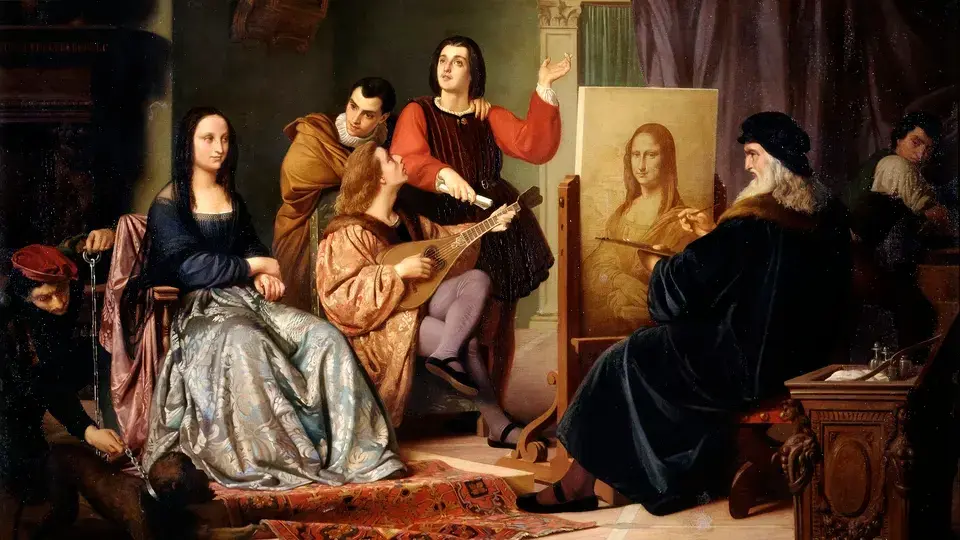
Clash of Ideas: The Renaissance vs. The Enlightenment
A detailed comparison between two of the most transformative periods in Western history. Discover the core ideas, key figures, and lasting impact of the Renaissance and the Enlightenment.
The modern world was not built overnight; it was forged in the crucible of intellectual and cultural revolutions. Among the most critical of these were the Renaissance and the Enlightenment, two distinct periods that fundamentally reshaped humanity’s understanding of itself and its place in the universe. While the Renaissance was a “rebirth” of art and human potential, the Enlightenment was an “awakening” of reason and individual rights. Let’s explore this monumental clash of ideas.
The Renaissance: A Rebirth of Human Potential
Flourishing from the 14th to the 17th century, the Renaissance was a fervent period of cultural, artistic, and scientific rediscovery. Its driving force was Renaissance Humanism, an intellectual movement that shifted focus from medieval scholasticism to human potential and the wisdom of classical antiquity.
Art, Science, and the Measure of Man
This was the age of titans like Leonardo da Vinci and Michelangelo, whose works in Renaissance Art celebrated anatomical accuracy and human emotion with unprecedented realism. No longer were humans merely vessels for the divine; they were “the measure of all things.” This spirit of inquiry also ignited the early sparks of the Scientific Revolution. Visionaries like Galileo Galilei challenged long-held dogmas with empirical observation, using the telescope to prove the heliocentric model and forever changing our view of the cosmos. The Renaissance, in essence, taught humanity to look at the world—and itself—with new eyes.
The Enlightenment: The Age of Reason
Picking up where the Renaissance left off, the Enlightenment (roughly the 18th century) was an intellectual movement that championed reason as the primary source of authority and legitimacy. If the Renaissance rediscovered the individual, the Enlightenment sought to define and protect that individual’s rights.
Philosophy, Politics, and the Rights of Man
Thinkers like John Locke, Voltaire, and Rousseau became the architects of modern political thought, arguing for principles like liberty, separation of powers, and government by the consent of the governed. These radical ideas, compiled under the umbrella of The Enlightenment, challenged the absolute power of monarchies and the church. Enlightened despots like Catherine the Great embraced these philosophies to reform their nations, while across the Atlantic, these very principles fueled the American Revolution, led by figures such as George Washington. The era’s emphasis on logic and universal laws was built upon the scientific foundations laid by giants like Isaac Newton, whose laws of motion suggested that the universe was an orderly, knowable system.
A Tale of Two Eras: Core Differences
| Aspect | The Renaissance | The Enlightenment |
|---|---|---|
| Core Focus | Human potential, art, and rediscovery of the past. | Reason, individual rights, and the future of society. |
| Source of Truth | Classical Greek & Roman texts, empirical observation. | Logic, skepticism, and the scientific method. |
| Key Output | Masterpieces of art, literature, and scientific discoveries. | Political manifestos, constitutions, and philosophical treatises. |
| Impact | Freed the individual from medieval constraints. | Empowered the individual with inalienable rights. |
The ultimate legacy of the Enlightenment can be seen in documents like the American Declaration of Independence and legal systems like the Napoleonic Code, which codified principles of liberty and meritocracy.
Conclusion: From Rebirth to Revolution
The Renaissance and the Enlightenment are not opposing forces but rather two critical stages in the same journey. The Renaissance gave humanity a renewed sense of self-worth and curiosity, providing the intellectual tools and confidence necessary for the next leap. The Enlightenment took that empowered individual and built a framework for a more just, rational, and free society.
One was a revolution of the canvas and the laboratory; the other, a revolution of the parliament and the mind. Together, they form the twin pillars upon which our modern world stands.
Curious about the figures who defined these eras? Explore our Pantheon of Titans or journey through the ages on our Interactive Timeline.
Continue Reading
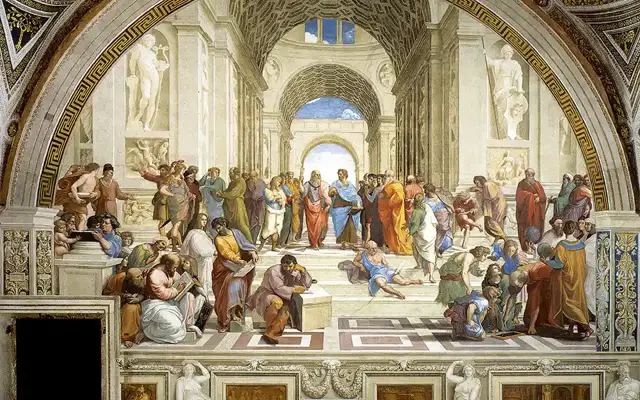
The Teacher and The Student: How Plato and Aristotle Shaped Reality
A detailed analysis of the foundational philosophical conflict between Plato and his greatest student, Aristotle. Explore their opposing views on reality, knowledge, and ethics that created the twin pillars of Western thought.
Read More →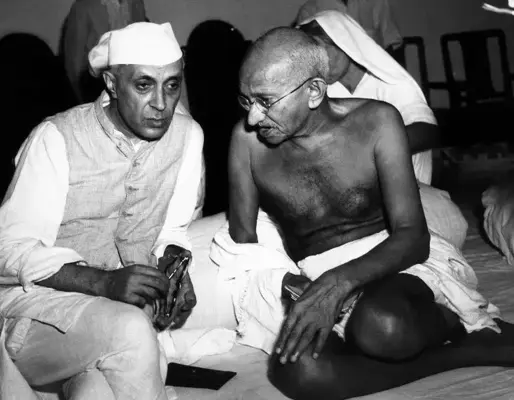
The Liberators: Lincoln's War vs. Gandhi's Peace
A profound analysis of two of history's greatest liberators. How does Abraham Lincoln's war to save a union and end slavery compare to Mahatma Gandhi's nonviolent revolution to free a nation?
Read More →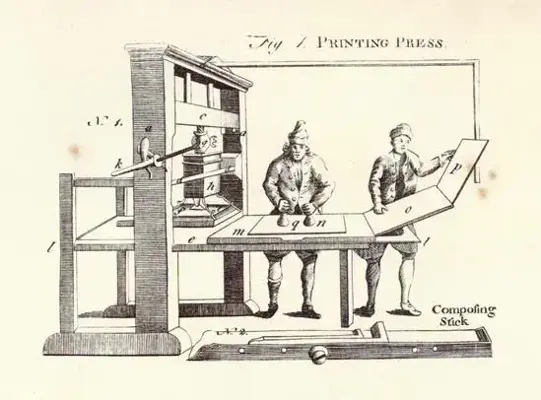
The Gutenberg Press vs. The Internet: An Unlikely Parallel
How did a 15th-century invention mirror the disruption of the digital age? An expert analysis of the Printing Press and the Internet, two technologies that democratized information and changed the world forever.
Read More →